Miniday: A Modern Handwritten Script Font for Branding Projects
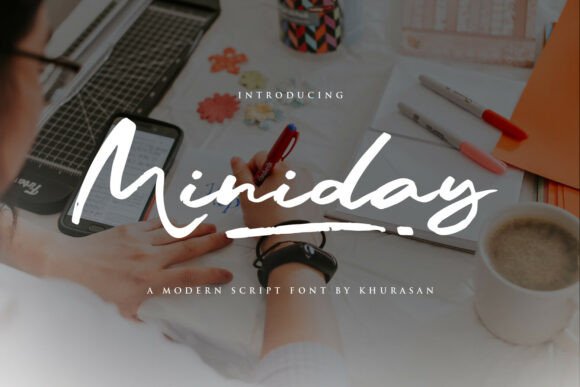
I was working on a branding project for a small, locally owned café when I first came across Miniday. As a graphic designer, I always look for fonts that feel authentic and can carry the brand’s personality without overcomplicating things. Miniday, with its modern handwritten script style, fit perfectly into the café’s warm and inviting vibe. Its clean, flowing strokes mimic natural penmanship, giving it that casual yet refined look that feels just right for a space where people want to feel comfortable and connected.
Miniday in Logo Design for a Cozy Café
One of the first places I tested Miniday was in the logo design for the café. The owner wanted something that felt personal and approachable, not too formal or corporate. Miniday’s slightly slanted letterforms and elegant monoline strokes gave the logo a handcrafted charm, while still maintaining enough professionalism to be suitable for signage and packaging. It worked especially well in the main logo mark, where it added a touch of warmth and character without overwhelming the design.
I also experimented with pairing Miniday with a sans serif font for the supporting text. This combination helped balance the script font’s fluidity with the clarity of a more structured typeface. The result was a logo that looked great on everything from coffee cups to social media posts.
Miniday for Packaging Design and Product Labels
When it came time to design the café’s packaging, I knew Miniday would be a strong contender. The font’s clean, flowing style translated beautifully onto product labels and takeaway containers. It had a subtle elegance that didn’t clash with the café’s rustic, home-style aesthetic. I used Miniday for the brand name on the front of the packaging, and paired it with a simple sans serif for the ingredient list and pricing information.
What stood out was how well Miniday scaled down to small sizes. Even on tiny label stickers, the font remained legible and stylish. It didn’t feel cramped or messy, which is a common issue with many script fonts. That made it ideal for a variety of packaging elements, from coffee bags to sugar jar labels.
Miniday in Social Media Graphics and Website Headers
The café’s online presence needed to match the same friendly and inviting tone as their physical space. For their Instagram posts and website headers, I used Miniday as the primary display font. It had a nice weight and contrast that made it stand out against lighter backgrounds without being too bold or distracting.
I found that Miniday worked best in short-form text, like headlines and taglines. When used in longer paragraphs, it could become difficult to read, so I reserved it for visual impact rather than body copy. On the homepage hero section, it was perfect for a call-to-action like “Come Taste the Difference.” It added a personal, human touch that resonated well with the café’s target audience.
Miniday for Business Cards and Printed Marketing Materials
As part of the overall brand identity, I created a set of business cards using Miniday. The font’s slight slant and flowing lines gave the cards a sense of movement and energy, which aligned with the café’s mission to bring joy and connection through every cup of coffee. I paired Miniday with a minimalist sans serif for the contact details to ensure readability and maintain a professional appearance.
For printed marketing materials like flyers and posters, Miniday added a unique flair. It wasn’t too ornate, so it still felt modern and fresh. It was particularly effective in larger formats, where the font’s subtle curves and lines could be fully appreciated. It helped create a cohesive visual language across all brand materials, making sure the café’s identity felt consistent and recognizable.
Miniday and Typography Best Practices for Branding
Using Miniday in this project taught me a few key lessons about working with script fonts in branding. First, it’s important to test the font in different contexts before committing to it. While Miniday works well in logos and headings, it may not be the best choice for long blocks of text due to its stylized nature.
Font pairing is another crucial aspect. Miniday pairs nicely with both serif and sans serif fonts, but I found that a clean, modern sans serif provided the best contrast and balance. It’s also worth considering the font’s multilingual support and file formats if you plan to use it across multiple platforms or languages.
Finally, I recommend using Miniday as an accent or display font rather than a primary typeface for body copy. It adds personality and character to your designs, but should be used thoughtfully to maintain readability and visual hierarchy.
Miniday for Creative Studios and Small Business Branding
Whether you're designing for a creative studio, handmade shop, or local restaurant, Miniday has the versatility to work across a wide range of industries. Its modern handwritten script style gives it a timeless appeal that can be adapted to different brand personalities. From wedding invitations to editorial design, Miniday brings a sense of authenticity and refinement to any project.
If you’re looking for a script font that feels both casual and professional, Miniday is definitely worth exploring. It’s a great option for anyone who wants to add a personal touch to their branding without sacrificing legibility or style. Just remember to pair it wisely and use it in the right context to get the most out of its unique characteristics.